
(The information provided is the author’s interpretation of Federal and Florida laws and does not constitute legal advice)
There are many types of working dogs, but for the purpose of this article, there are essentially 3 different types: Therapy Dogs, Emotional Support Animals (ESAs), and Service Dogs.
I frequently hear these terms used interchangeably when they are actually three completely different legal definitions.
Therapy Dog
A Therapy Dog is a dog that is trained to go into schools, hospitals and nursing homes. The services that they provide are for the benefit of other people, not their owner/handler.
Therapy Dogs have NO public access rights. They are allowed in these locations by invitation only.
ESA
An Emotional Support Animal helps their handler simply by being there. To qualify for an ESA, you must have a psychiatric disability that is certified by an attending physician who has also attested that the animal has a significant effect to alleviate the condition.
An ESA has some special access rights when it comes to housing. ESAs do NOT have access rights in public locations such as restaurants, movie theaters, hospitals, etc.
A common misconception – Just because your disability is psychiatric in nature does not necessarily mean that you fall into this category. It is possible to have a Service Dog to alleviate psychiatric disabilities such as PTSD. It is a matter of how the dog is trained and what they DO. (see below)
Service Dog
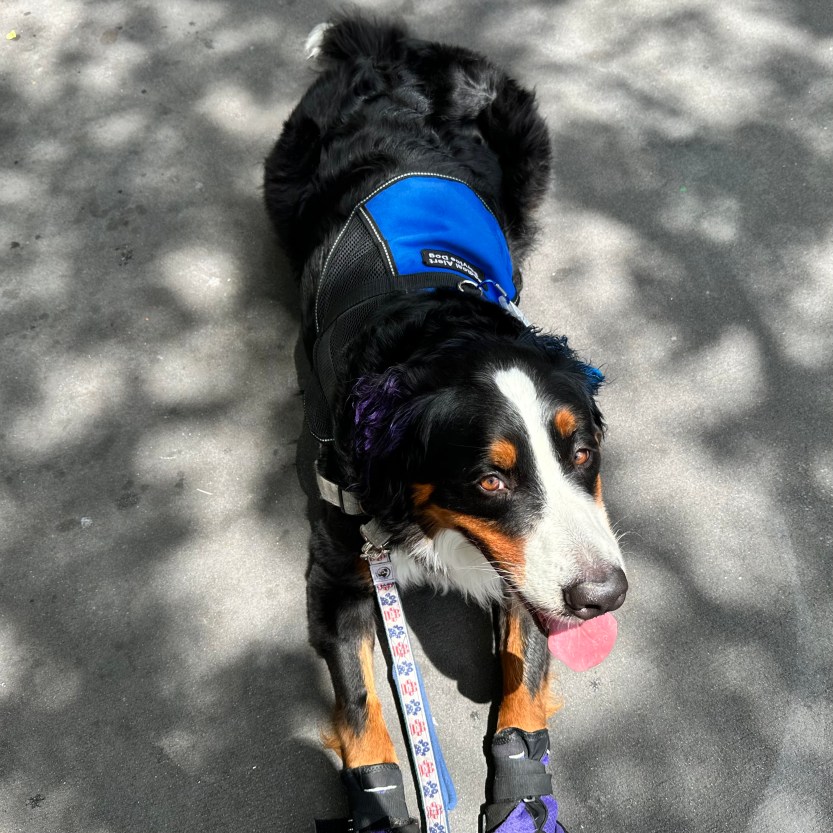
A Service Dog must be ‘task’ trained; they must DO something to alleviate their handler’s disability. For example, my dog Mouse is a Diabetic Alert Dog. She will tell me if my blood sugars are too high, too low, changing rapidly, and she will obtain the help of someone else if it is needed.
A service dog is granted full access rights in public areas, as such there are far more requirements regarding training and behavior. If your service dog is not behaving appropriately (barking, soiling, acting aggressive) they CAN and SHOULD be asked to leave, and you need to address your training. A one-time unusual occurrence or an ill Service Dog is an exception, regular behavior problems is NOT a service dog.
For additional information on service dogs, please visit the ADA site about service dogs, or their FAQ section.
Please subscribe to my blog for more information about service dogs and central Florida.
Also, please check out my shop, Mouse’s Dog Gear, for handmade collars and leashes!

 Welcome to Mouse’s Dog Gear, We’ll be Exploring Florida with my Service Dog Mouse.